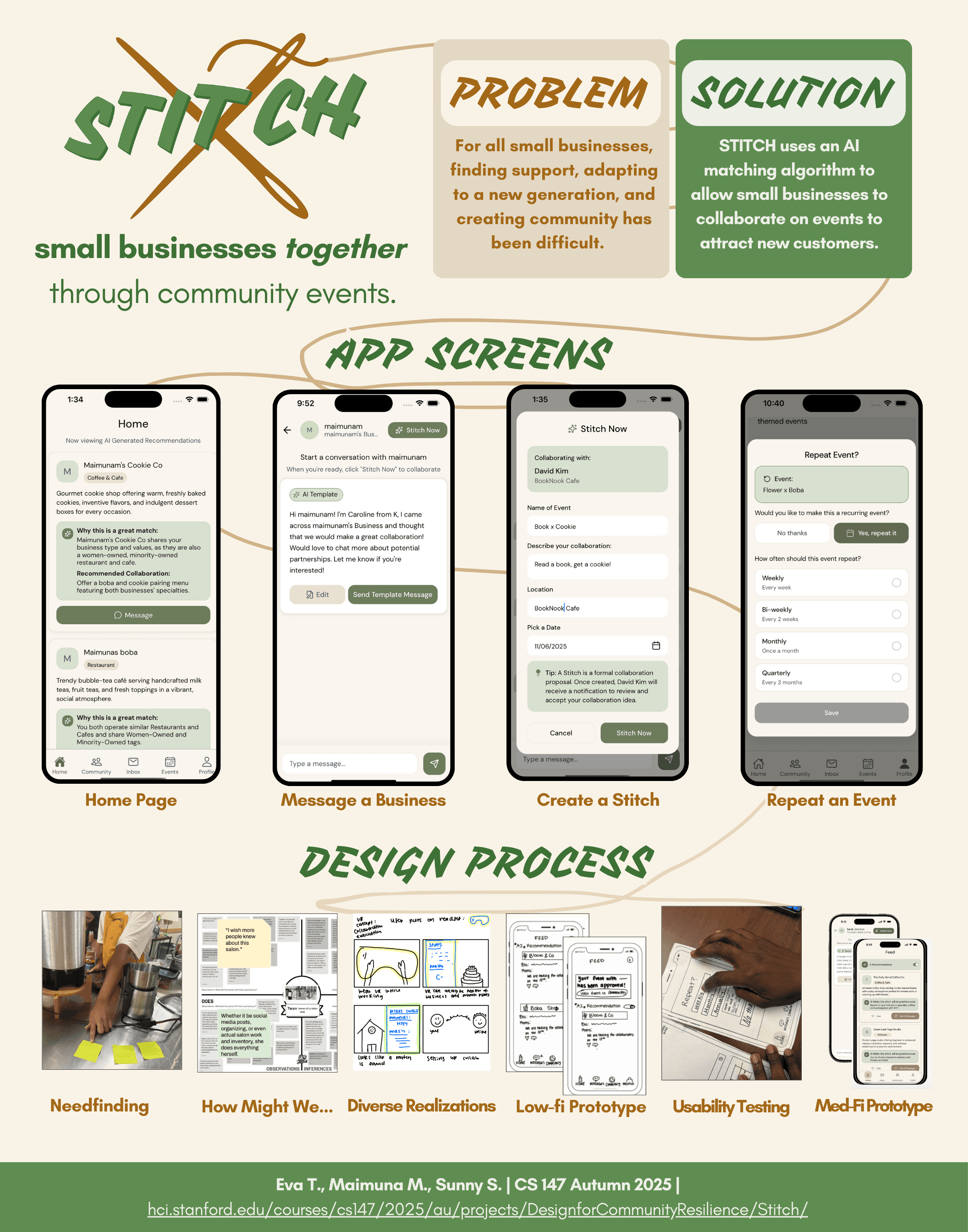
Fig. 3 · HCI · AI · CS147
Stitch
AI matching helps small businesses collaborate on events to attract new customers, from establishing newcomers to helping legacy shops adapt.
Founder · Fall 2025
Read case study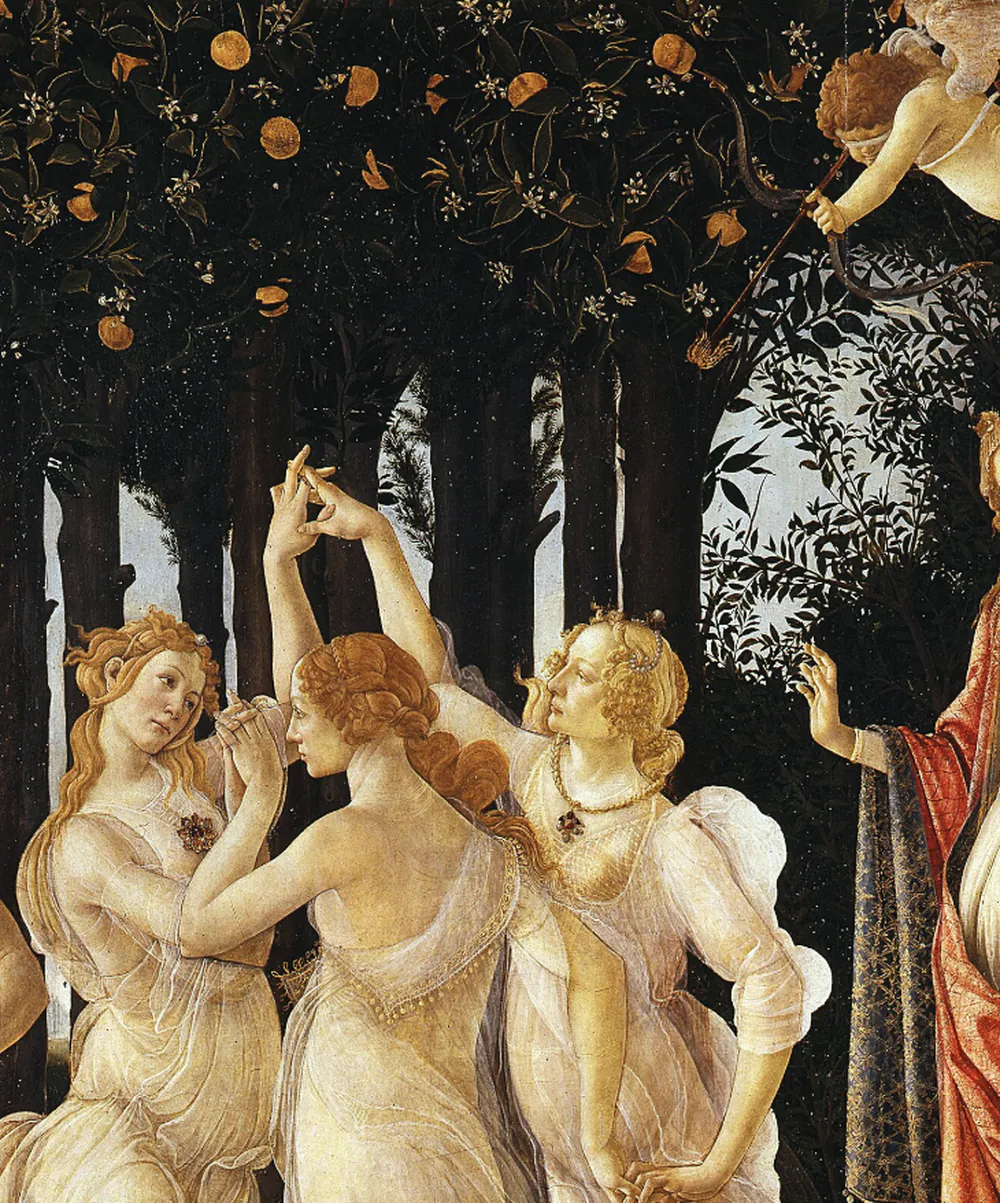
Fig. 1 · Botticelli's Primavera, the 3 graces and cupid
Exploring the intertwining of human and artificial intelligence
Shaping AI interfaces at the frontier of HCI and crafting solutions that empower people without creating overreliance
SUBJECT 01
human-computer interaction concentration
Fig. 2 · CS147 demo day
Fig. 3 · HCI · AI · CS147
AI matching helps small businesses collaborate on events to attract new customers, from establishing newcomers to helping legacy shops adapt.
Founder · Fall 2025
Read case study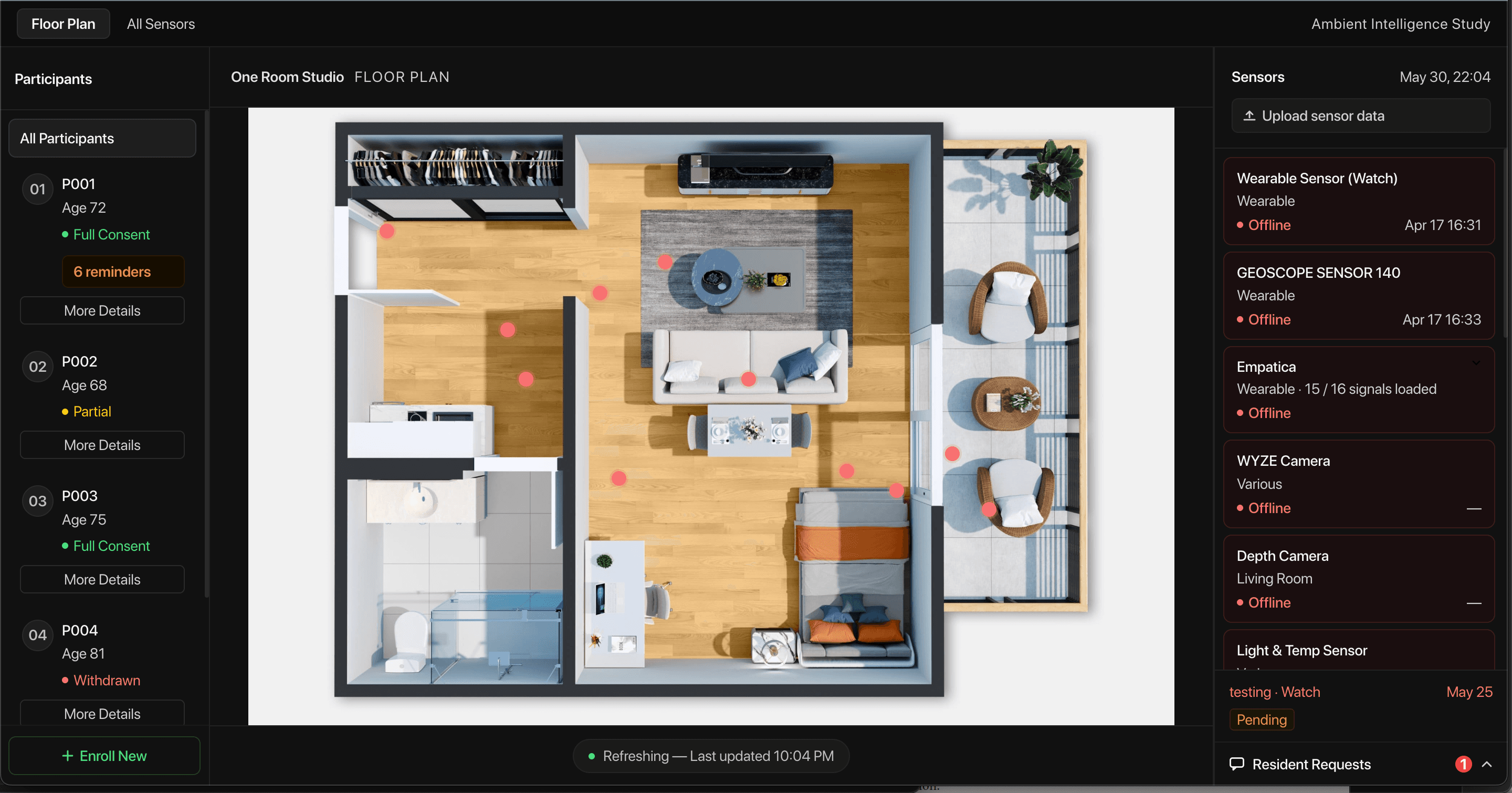
Fig. 4 · HCI Research · Full-Stack · Privacy
The number of US adults over 60 is set to double by 2050, outpacing the caregivers meant to support them. Ambient intelligence, a network of in-home sensors that tracks daily activity, is one way to help them age in place safely. To run a study like that in real homes at The Sequoias, I designed and built two linked dashboards on a shared backend: one giving residents direct control over every sensor, the other letting researchers catch failures before any data is lost.
Design & Full-Stack Prototype · 2025 – 2026 · Stanford HAI
Read case study.jpg&w=3840&q=75)
Fig. 5 · UX Research · PM · AI
UX research and go-to-market strategy for Google's on-device AI image generation tool: 90 surveys, 15 interviews, 7 recommendations.
Project Manager · March – June 2025
Read case studyFig. 6 – 10
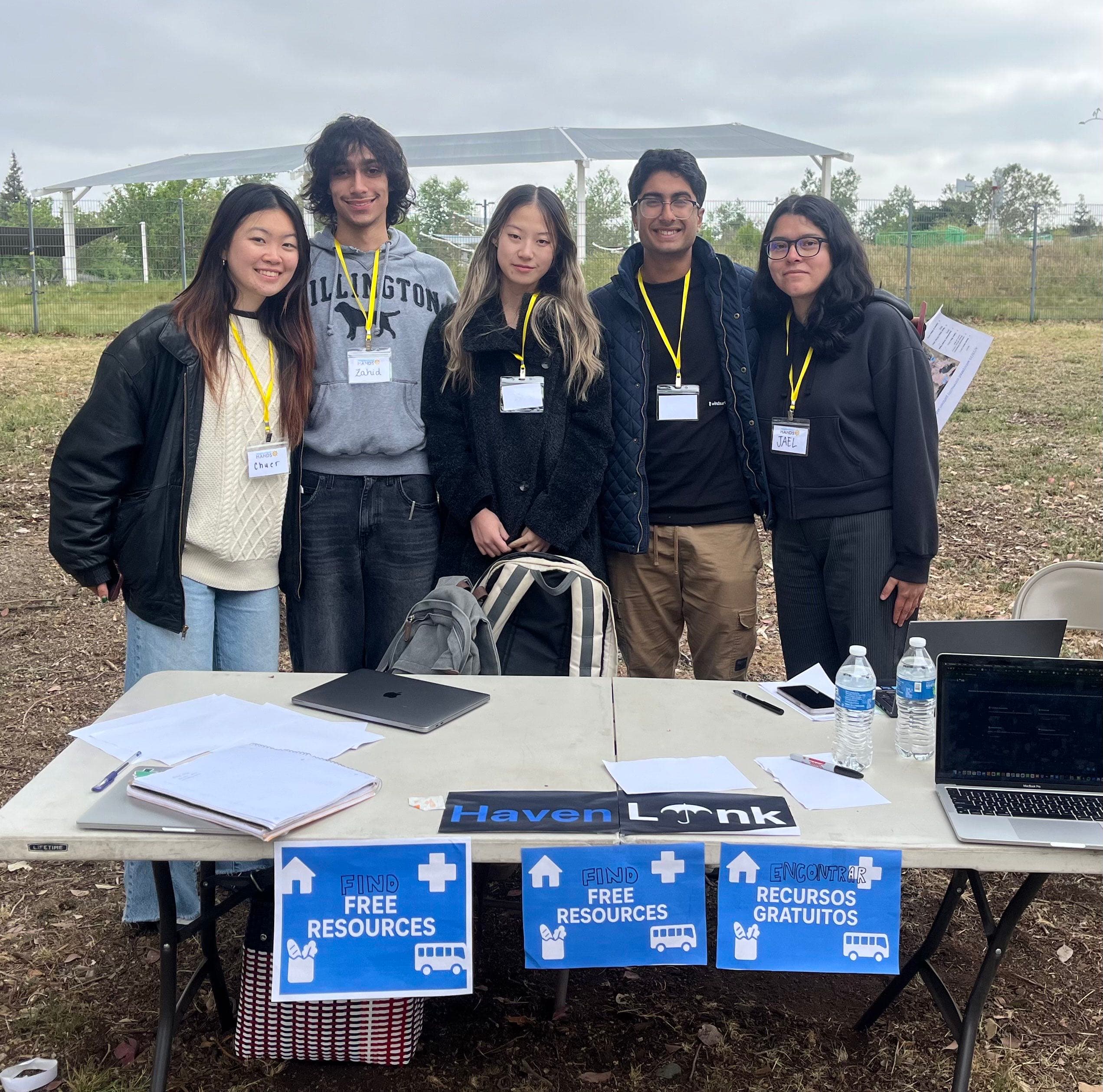
An AI chatbot that acts as a case manager to help connect unhoused people in the Bay Area with housing, food, medical, and transportation resources.
Project Lead · 2024 – 2025
Read case study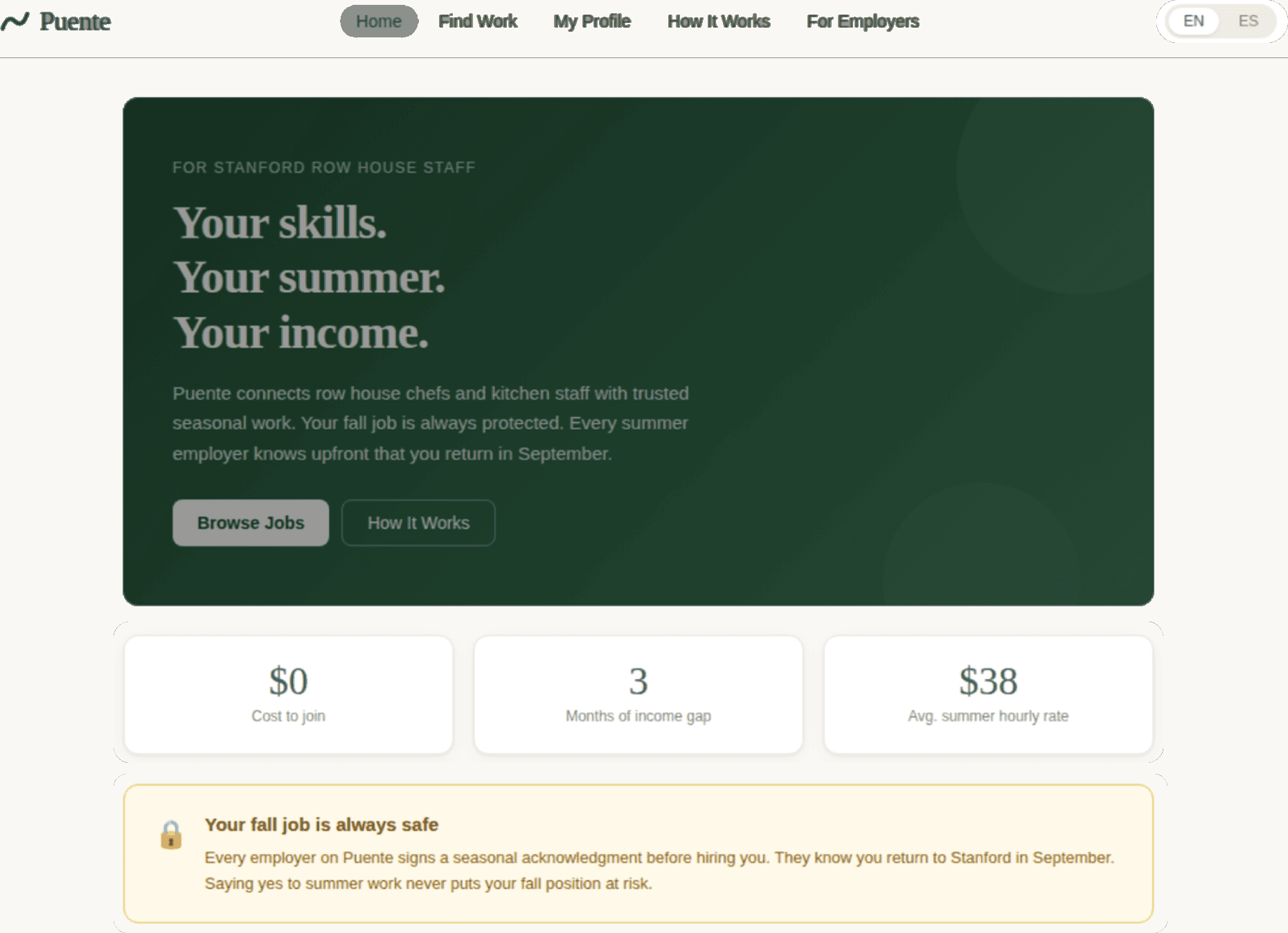
A seasonal job matching platform for Stanford row house chefs, jobs arrive over WhatsApp, the chef replies YES or NO, and an employer-verified return guarantee means summer work never risks the fall position.
MS&E 265 · 2026
Read case study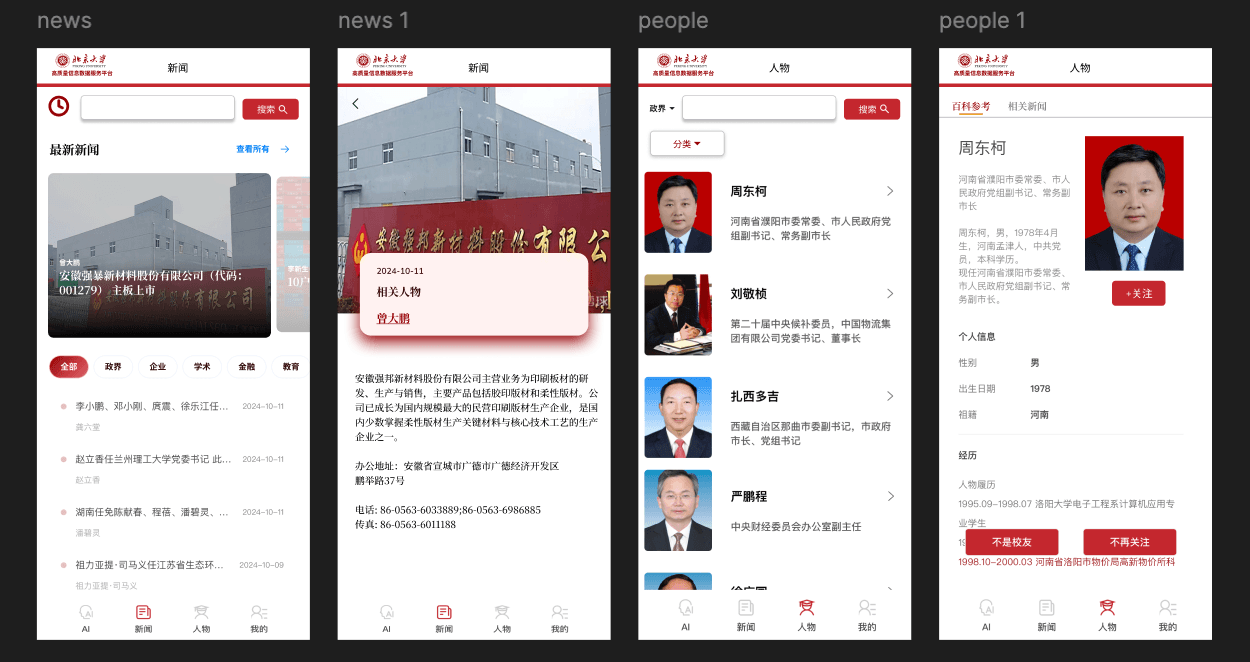
Rebuilding how Chinese universities keep and use alumni records at 100k+ scale.
Product Manager · 2024
Read case study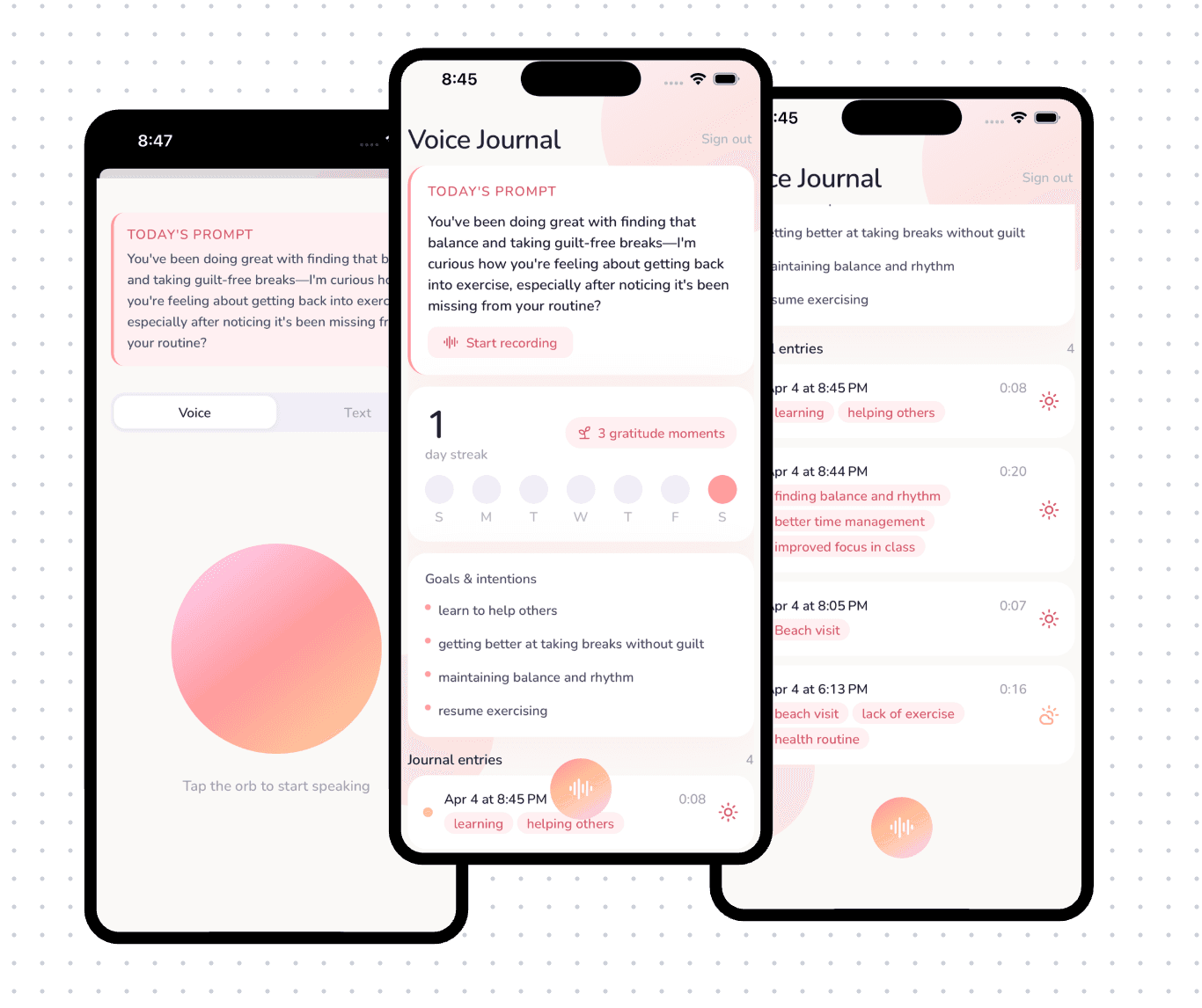
A voice journaling app that turns spoken thoughts into structured reflection.
Personal Project · 2025
Read case study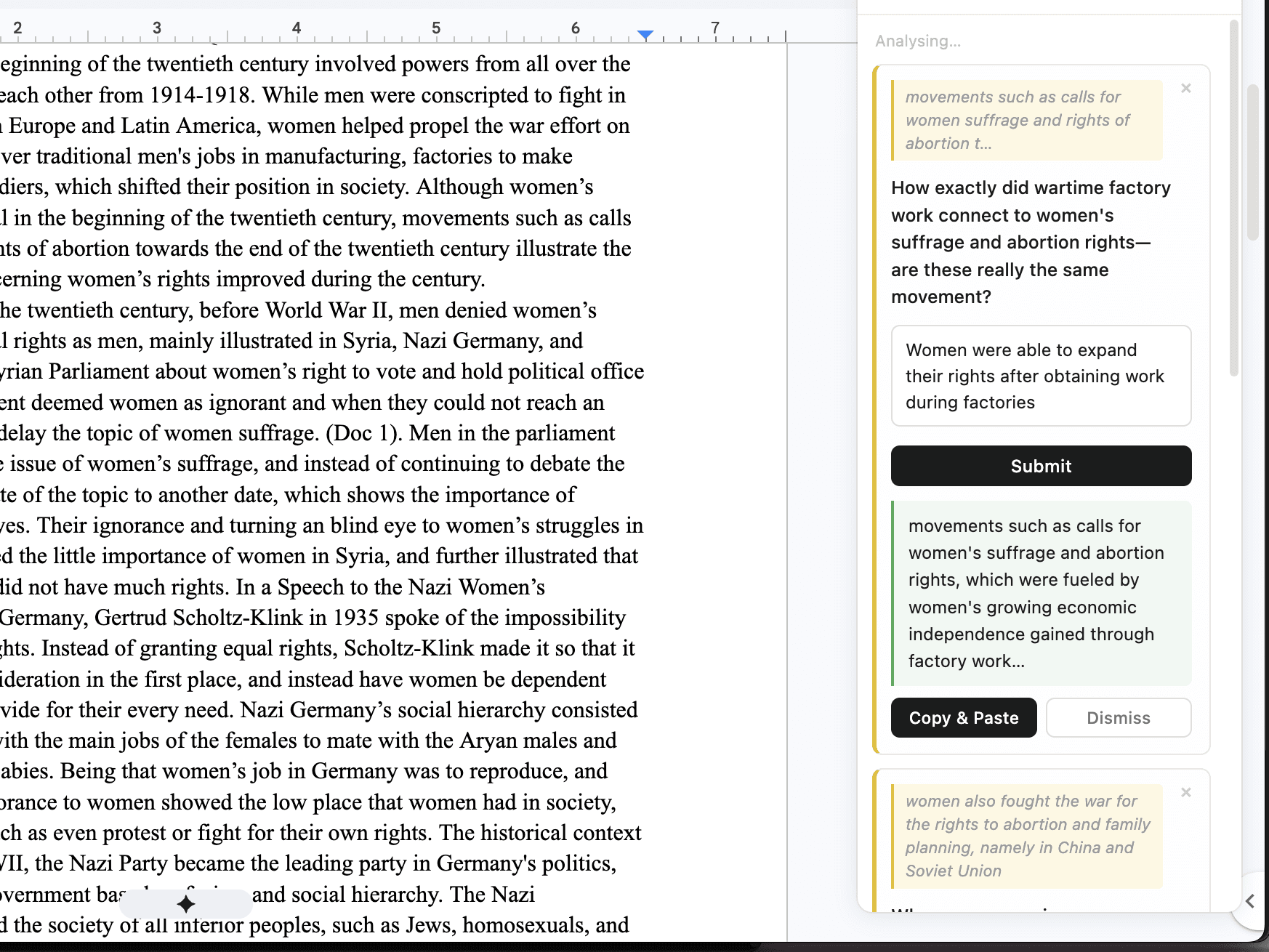
A Socratic writing coach for Google Docs. It asks targeted questions about your reasoning while you write, then helps you revise.
Personal Project · 2026
Read case study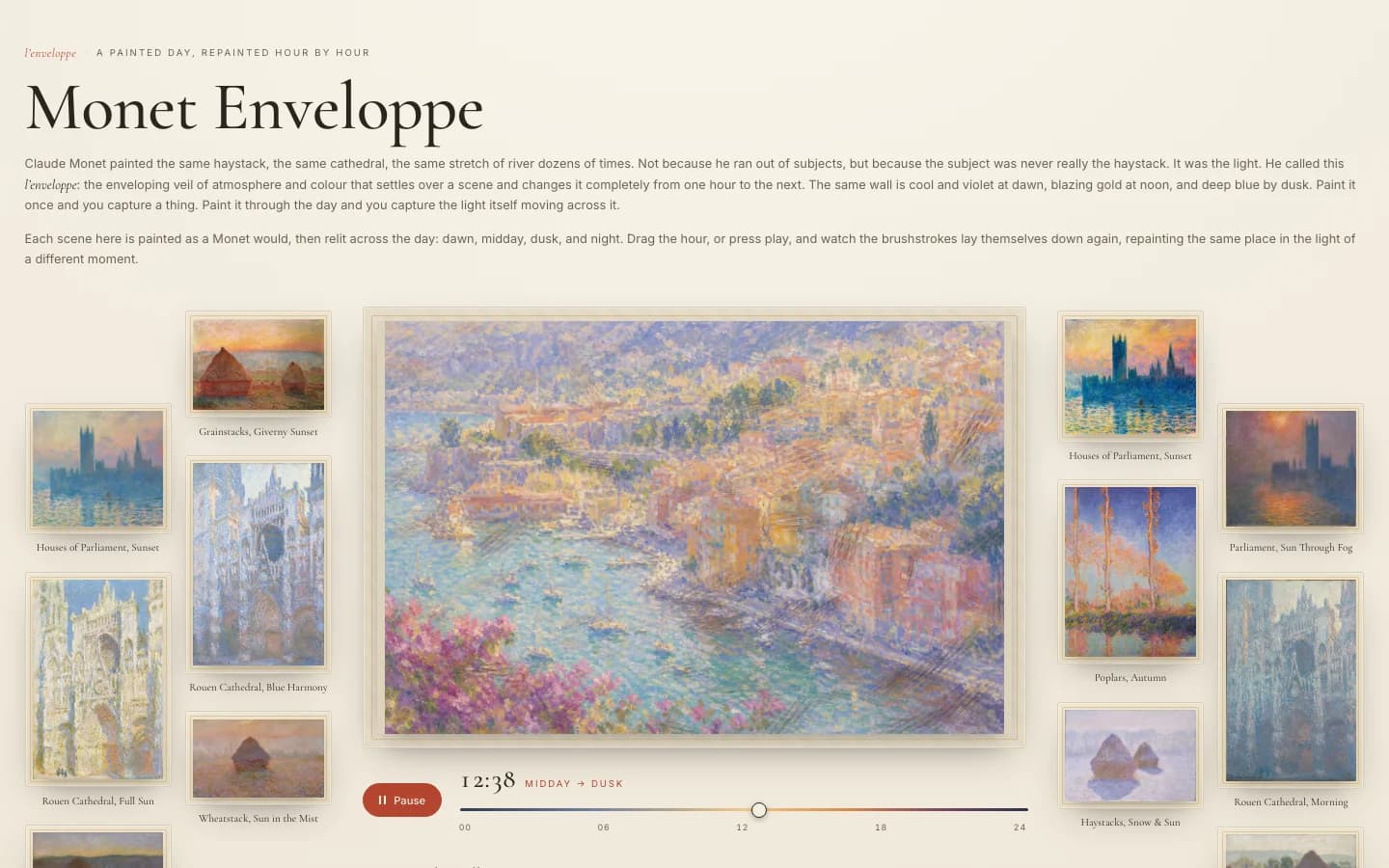
Fig. 12
Monet painted the same haystack dozens of times because he was actually painting the atmosphere around it (enveloppe). Drop in a photograph and this repaints it as a Monet, then relights it hour by hour across a day. Inspired by Monet in Venice show in SF 2026
Open monet-enveloppe.vercel.app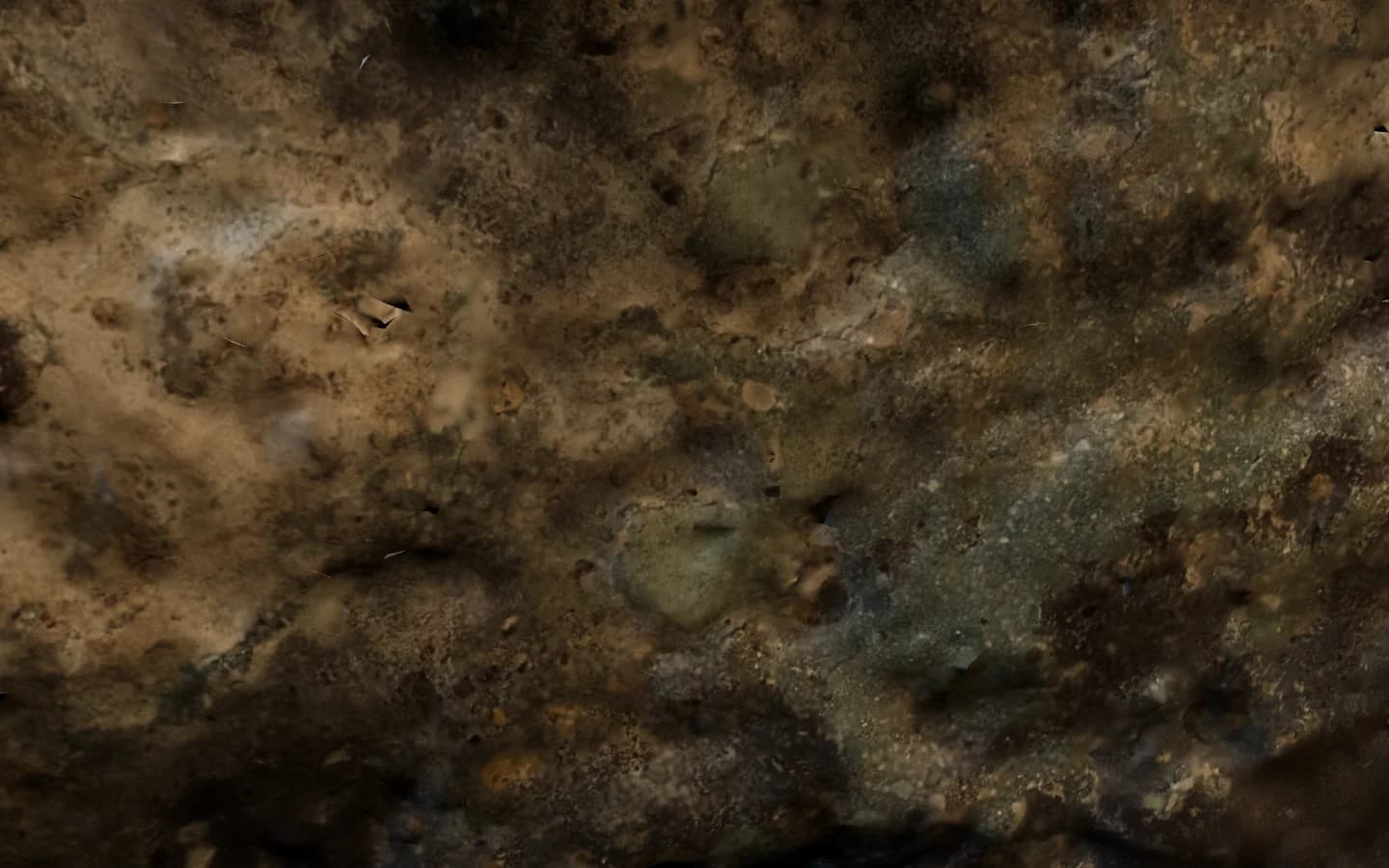
Fig. 13
An exploration of texture. Materials such as terracotta, bronze, and marble evolves over time to have different form and function, but they always have a memory underneath it. Built from scans by the museums that hold the objects.
Open patina-texture.vercel.app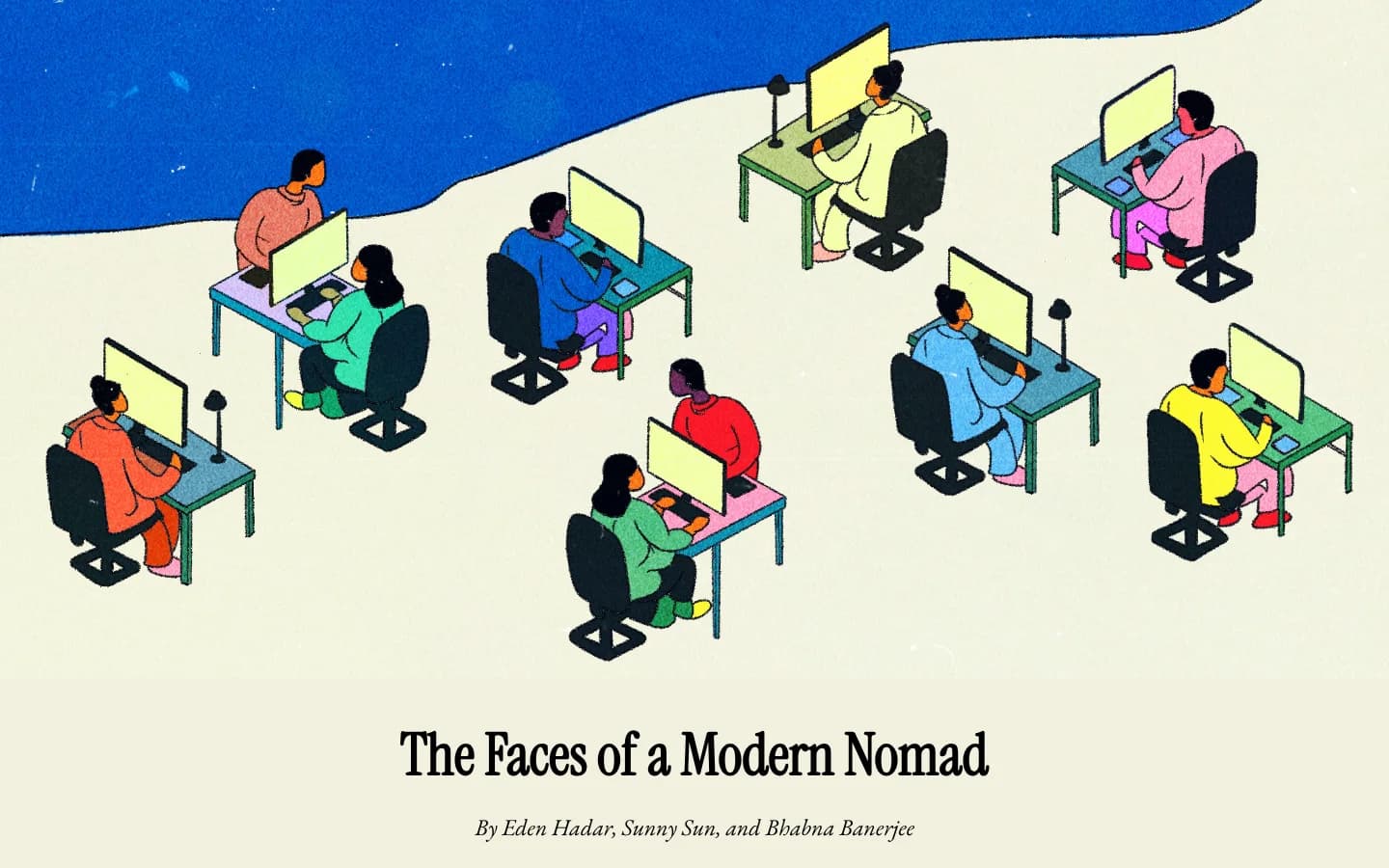
Fig. 14
An interactive data essay on the stories of 3 very different digital nomads, and how digital nomadization impacts the society they move to
Open digitalnomadfaces.netlify.appCS 238
CS 221
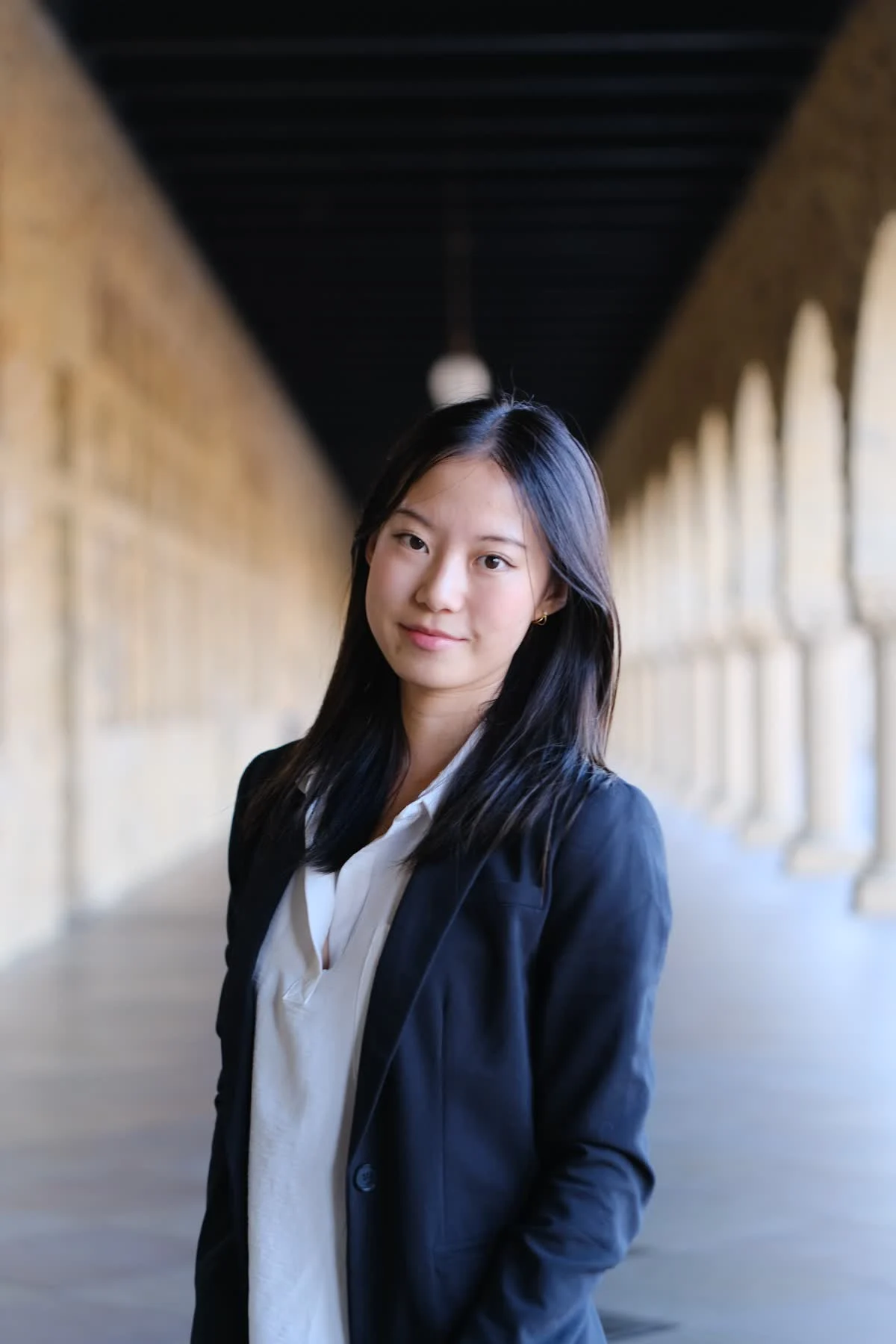
Fig. 17
Recently: consulting at Bain, product management at Hatch Sleep, Nectar Social, and Beijing Powersoft Technology, UX research at Google, Spotify, and BiotechBeauty, and a fellowship at True Ventures.
I've been building things since before I had the vocabulary for it: fashion sketches at 8, a Wix site for my YouTube channel at 11, then whatever tool I needed next, Photoshop, Figma, Blender...
It was during CS147 where I first built a product end to end. My team built Stitch, an AI matching platform that helps small businesses co-host community events. We started with user interviews on University Ave and ended with a working React Native app on a live Gemini backend, and it won Best Poster on demo day. What fascinated me most was the gap between what people say and what they actually mean. During needfinding for Stitch, a customer told us she wanted to support small businesses, then mentioned she buys 90% of her goods from big chains. We built the product around that contradiction. Experiences like this are why I love empowering people through technology, continually iterating and finding new ways to address their needs.